
Sheboygan, WI · Garage Door Service
Opener Installation for Kohler's 1968-Era Garage Doors
Kohler homes date to around 1968, with original track hardware still bolted to the framing. We install openers built for that setup, traveling 2 miles from Sheboygan.
- Repairs & new doors
- Springs & openers
- Serving 7 nearby communities
Getting It Booked In
We run this job out of Sheboygan, about 2 miles from Kohler, so there's no separate branch or crew based in town - just a truck that comes over when you call. That's worth knowing up front: we're not quoting a Kohler-specific response time, because we don't have a local depot to promise one from.
What we can tell you is what we'll be looking at before we even pull in the driveway. Kohler's housing stock centers around 1968, which puts a lot of these garages squarely in the chain-drive opener era - heavier units, often mounted to brackets that have never been touched since the house went up. Booking the visit means telling us the opener brand if you can read it off the unit, and whether the door itself has been replaced or is original to the house. Both change what we bring on the truck.
With median household income in Kohler well above the wider service area, we also see more owners asking about quieter belt-drive units and battery backup from the start rather than treating those as later upgrades. Good to mention that on the call too, since it changes the part count, not just the price.
What Can Go Wrong
A garage built around 1968 has usually had an opener swapped once or twice, but the track, the header bracket, and the roller hardware bolted into the framing are often original. Nobody replaces a bracket unless it fails outright, and most don't.
That matters for installation because a new opener has to mount to that old bracket, and 55 years of expansion and contraction in the wood can leave it loose, cracked, or set at an angle the new unit wasn't built for. We see it most on houses that still have the original one-piece or early sectional door from that build era - the opener arm geometry doesn't always line up with a bracket drilled for a different door profile decades ago.
The other failure point is wiring. A 1968 garage wasn't built with a dedicated opener circuit in mind, so power often comes off a shared line or an extension cord someone ran years back. That's not a Kohler-specific code violation we're citing - it's just what we find when we open the wall box - but it's the kind of thing that turns a one-hour opener swap into a half-day job if the circuit can't carry a modern unit.
The DIY Question
Opener kits are sold like they're a weekend project, and mechanically, hanging the unit isn't the hard part. The hard part in a house from this era is the bracket underneath it - the thing you're bolting the new opener to. If that header bracket is original to 1968, you're drilling into wood that's taken decades of seasonal movement, and a kit opener weighs more than people expect when it's swinging on a ladder.
Wiring is the other piece. If your garage is on a shared circuit rather than a dedicated line, a DIY install can leave you with an opener that works fine until it doesn't - nuisance trips, a motor that strains on cold mornings. We're not going to tell you every opener swap needs a pro; a straightforward unit-for-unit replacement on sound hardware is a reasonable DIY job for someone comfortable with a drill and a ladder.
Where we'd stop you is the bracket inspection. If you can't tell whether that header is original and sound, that's the one thing worth a second set of eyes before you hang anything off it.
How We Fix It
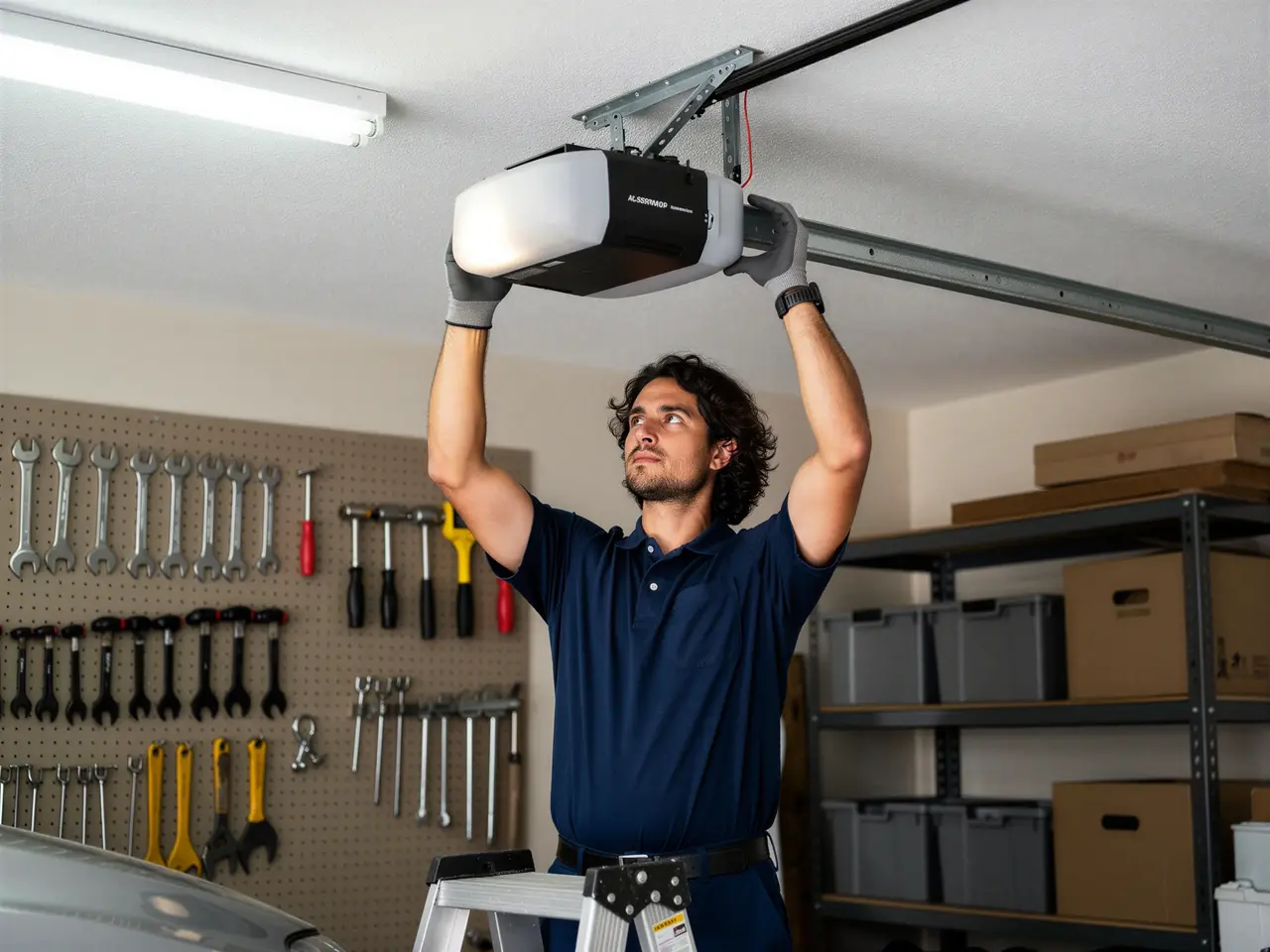
We start by checking the bracket and track before we talk opener brand, because on a house from 1968 that's usually the real question. If the hardware's sound, we mount a belt or chain-drive unit sized to the door weight and wire it to its own circuit if the panel allows - we won't run a new opener off a shared line that's already marginal.
If the bracket's cracked or the track geometry doesn't match a modern opener arm, we tell you that before we install anything, because bolting a new motor to failing hardware just moves the problem a year down the road. That's the honest limitation here: sometimes the job you called about an opener turns into a track and bracket replacement first, and we'd rather say that on the first visit than have the unit tear loose later.
Once the hardware's confirmed, installation itself usually runs a couple of hours - programming remotes, setting the travel limits, and testing the safety reversal on the door itself, not just the motor. We travel from Sheboygan for the job, so we schedule it as a full visit rather than a quick stop.
Frequently asked questions
Is my original opener bracket from 1968 safe to reuse?
Sometimes, but we check it before mounting anything new. Decades of wood movement can crack or loosen the header bracket even if it looks fine from the ground. If it's sound, we reuse it. If not, we replace it as part of the job rather than hang a new motor on hardware that's already failing.
Do you have a crew based in Kohler?
No. We work out of Sheboygan and travel roughly 2 miles to reach Kohler for every job, opener installs included. There's no separate local branch, so we don't quote a Kohler-specific response time - just a scheduled visit from the Sheboygan truck.
Why does my garage only have one shared circuit for power?
Houses built around 1968 weren't wired with a dedicated opener circuit in mind. A lot of Kohler garages still run power off a shared line or an old extension cord setup. A modern opener runs better and safer on its own circuit, which we can often add during the install if your panel has room.
Can I install a quieter belt-drive opener instead of chain-drive?
Yes, and we see more Kohler homeowners ask for this upfront rather than treating it as a later swap. Belt-drive units cost a bit more but run quieter, which matters if the garage sits near living space. We'll size it to your door weight either way.
Book garage door service in Sheboygan
Call now or request a quote - tell us what the door is doing and where you are.