
Sheboygan, WI · Garage Door Service
Sheboygan Garage Door Repair: Cold-Weather Spring Failures
Most Sheboygan homes date to 1948-1992, with torsion springs rated for a climate that punishes steel every winter. Here's what that combination actually does to your door.
- Repairs & new doors
- Springs & openers
- Serving 7 nearby communities
The Common Mistake
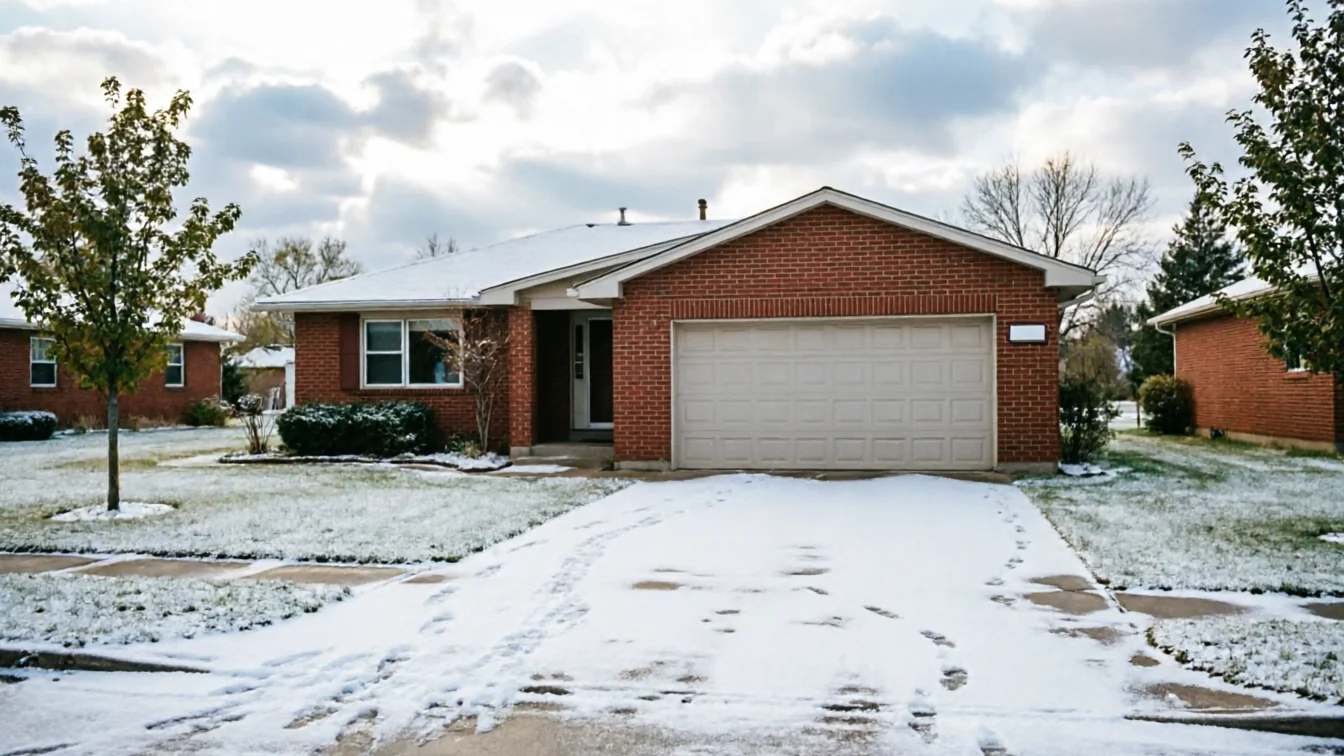
The mistake we see most in Sheboygan is treating a stiff door in January the same way you'd treat it in July - give it a shot of WD-40 and call it fixed. That's backwards here. A lot of the housing stock in this area went up between 1948 and 1992, with the median landing around 1975, so a huge share of the torsion springs and openers out there are original or close to it, sized for a door that's 40 to 70 years old and has spent every one of those winters cycling through a severe cold climate. Spray lubricant doesn't change the fact that cold steel loses tension faster than warm steel. People lube the track, the door still groans, and they decide it's fine until the spring lets go. The actual fix in most of these older Sheboygan-area houses isn't lubrication, it's recognizing that a spring rated decades ago for a milder duty cycle is now brittle from thousands of cold-start cycles. If your door is from that 1948-1992 build window and you've never had the spring replaced, lubricant is buying you weeks, not years.
When It Stops Being a DIY Job
A torsion spring under tension is not a weekend project anywhere, but in a severe cold climate like Sheboygan's, cold-contracted steel changes how it fails - it's more likely to snap rather than slowly weaken, and it does it with more stored force released at once. If your door dates to that 1960s-70s stretch that makes up most of the local stock, the spring and the mounting hardware around it are old enough that the metal fatigue is already baked in before a cold snap even hits. That's the point to stop. Anything involving the spring, the cable, or the torsion bar on a house built in that era is a call-a-pro job, not a Saturday project. Where DIY still makes sense: tightening loose hardware, clearing a stuck roller, checking weatherstripping. Where it doesn't: anything where a coiled spring is holding tension and the steel is old and cold.
What Local Conditions Do
Cold doesn't just make things stiff - it changes the math on how a spring and an opener behave. In a severe cold climate, steel contracts, grease thickens, and the opener motor has to work harder to move a door that's heavier to lift than it was in August. On a door built during the area's main construction era, 1948 through 1992, that extra load lands on hardware that's already given up decades of cycles. We see the same pattern across the 17 communities in this service area, from Kohler two miles out to towns fifteen-plus miles away - older torsion setups that held fine for years suddenly failing in the first hard cold stretch of the season, because the steel finally met a load it couldn't absorb anymore. It's not bad luck. It's an old spring meeting the one season Sheboygan hits hardest.
What Is Going On
Put the two facts together - a housing stock centered on 1975, and a climate band that counts as severe cold - and you get a predictable failure pattern instead of a random one. Doors don't fail because owners did something wrong. They fail because the spring and cable hardware installed when the house was built was never meant to run this many cold-weather cycles without being swapped out. Across the owner-occupied houses in this area, a large share are old enough that this isn't a maintenance question anymore, it's a parts-age question. One limitation worth saying plainly: we can't always get a matching replacement spring on the same day, especially for older non-standard sizes from houses built well before current stock sizing. If your door is acting up only when it's cold, that's the hardware telling you something about its age, not the weather being unusual.
Frequently asked questions
Why does my garage door only act up in winter?
Cold steel loses tension and gets more brittle, which matters more if your spring is original to a house built in the area's common 1948-1992 window. The cold doesn't cause the problem, it exposes a spring that was already near the end of its working life.
Is my door old enough to worry about?
If your house was built in the 1960s or 70s, which covers most of the local stock, the original torsion spring and hardware have likely seen decades of cold-climate cycling. That's enough reason to have it checked before, not after, it fails.
Can I just lubricate it and wait until spring?
You can, and it may hold for a while, but lubricant doesn't restore tension to fatigued steel. In a severe cold climate, a weak spring tends to fail suddenly rather than gradually, so waiting isn't risk-free.
Related garage door services in Sheboygan
More garage door guides
Book garage door service in Sheboygan
Call now or request a quote - tell us what the door is doing and where you are.