
Sheboygan, WI · Garage Door Service
What a Service Call Actually Covers in Sheboygan
What a Sheboygan Garage Door Pros service call covers on the 1960s-70s housing stock common across Sheboygan, from torsion hardware to cold-weather opener checks.
- Repairs & new doors
- Springs & openers
- Serving 7 nearby communities
The Common Mistake
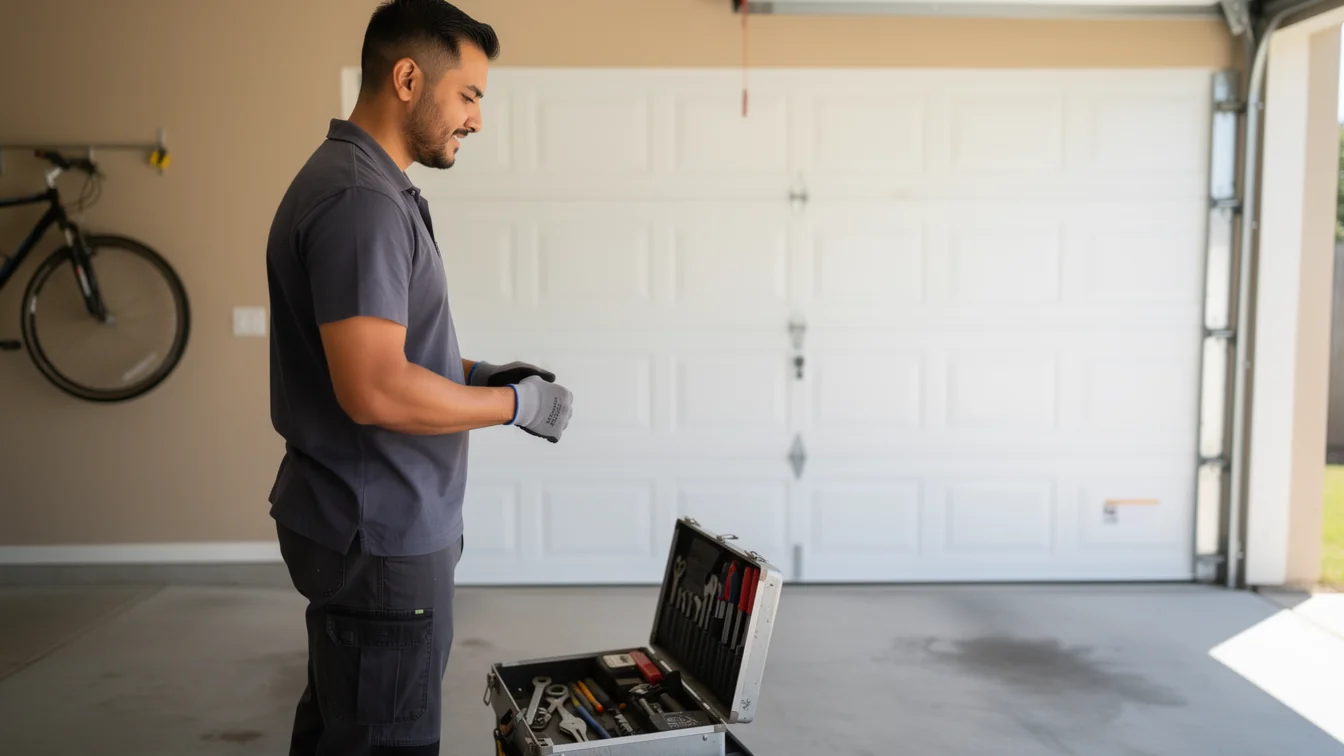
The mistake we see most in Sheboygan is a homeowner calling about a noisy door and expecting us to spray the tracks and leave. On a house built in the 1960s or 70s - and most of the housing stock in this service area dates from 1948 to 1992, with the median landing around 1975 - a noisy door is rarely a lubrication problem. It's usually hardware that's fifty years old doing exactly what fifty-year-old steel does: fatiguing. Rollers wear oval, torsion springs lose wind tension, and the mounting brackets that held up fine through a few thousand cycles start to work loose. We check all three before we touch a lubricant can. Spraying silicone on a spring that's two years from breaking doesn't buy you two years - it buys you a few quieter weeks and then a cable off the drum on a January morning. The common mistake isn't ignorance, it's treating symptom and cause as the same thing. A real service call opens the door up, looks at the hardware generation installed, and tells you what's actually failing underneath the noise.
When It Stops Being a DIY Job
Torsion springs are the line. If your door uses a torsion bar over the opening - which is standard on the original installs across the 17 communities we see, from Kohler out to Random Lake and Kiel - the spring is wound under several hundred pounds of stored tension. Original 1960s and 70s hardware on these doors was often installed once and never serviced again, so by the time a homeowner notices a problem, the spring is old enough that nobody can tell you its remaining cycle count. That's not a weekend project with a wrench from the hardware store. Cable replacement on a drum system falls in the same category, and so does anything involving the bottom bracket, which holds tension at the end of the spring's travel. What's fine to handle yourself: swapping a remote battery, tightening visible hinge bolts, clearing track debris, testing the photo-eye sensors. What isn't: anything where the door is held up by wound steel instead of your hands. We'll tell you straight on the call which side of that line your job falls on, and we won't talk you into a repair the hardware doesn't support.
What Local Conditions Do
Sheboygan sits in a severe cold climate band, and that matters more to a garage door than most people expect. Steel springs lose temper strength as temperature drops, so a spring that's marginal in August can fail outright on a sub-zero morning - the metal gets brittle right when the door gets heaviest to lift by hand. Openers see it too: chain-drive units slow down and gear-driven logic boards in older units can misread the cold as a resistance fault, triggering the safety reverse before the door ever reaches the floor. On a service call here, we check spring temper and opener response specifically for cold-weather behavior, not just whether the door moves on a mild afternoon in the driveway. We also look at weatherstripping and bottom seals, since a gap that doesn't bother you in July becomes a drift line across the garage floor once the season turns. None of this is unique to one house - it's a function of what cold steel and cold hydraulics do, applied to the specific hardware era common on this side of the state.
What Is Going On
Most of what shows up on a service call here traces back to the same starting point: hardware installed when these neighborhoods were built, between 1948 and 1992, still carrying the original torsion springs, drums, or cable sets decades later. A median household income of $86,023 across this area means most owners can choose full replacement over patchwork repair when the math favors it, and on a door old enough to predate current safety cable standards, we'll usually say so plainly. The honest limit here: we don't carry parts for every discontinued opener model from that era, and on some of the oldest units the lead time on a matching part can run longer than homeowners expect. When that's the case, replacing the opener costs about the same as waiting on the part, and we'll tell you that instead of stringing out a repair. A service call should end with you knowing what's original, what's worn, and what actually needs doing - not a guess dressed up as a diagnosis.
Frequently asked questions
Do you work on original garage door hardware from the 1960s and 70s?
Yes, and it's most of what we see given the housing stock in this area. We check torsion springs, drums, and brackets from that era for remaining life rather than assuming age alone means replace. Some parts are still available; others on older opener models can have longer lead times, which we'll flag on the call.
Why does my door act up more in winter?
Cold steel loses temper strength, so torsion springs that are already marginal tend to fail in sub-zero weather rather than mild weather. Chain-drive openers also slow down in the cold. A service call in this climate band checks spring condition and opener response specifically under cold conditions, not just on a mild day.
Is a noisy door always a lubrication fix?
Not usually on older hardware. Noise on a door built decades ago more often points to worn rollers, a loosening bracket, or a spring losing tension - lubricant masks it for a few weeks at most. We check the hardware itself before treating it as a simple maintenance item.
Can I replace a torsion spring myself?
We'd advise against it. A wound torsion spring holds several hundred pounds of tension and the original installs across this area are old enough that nobody knows the remaining cycle count. Battery swaps, hinge bolts, and clearing track debris are fine DIY jobs - spring and cable work isn't.
Related garage door services in Sheboygan
More garage door guides
Book garage door service in Sheboygan
Call now or request a quote - tell us what the door is doing and where you are.