
Sheboygan, WI · Garage Door Service
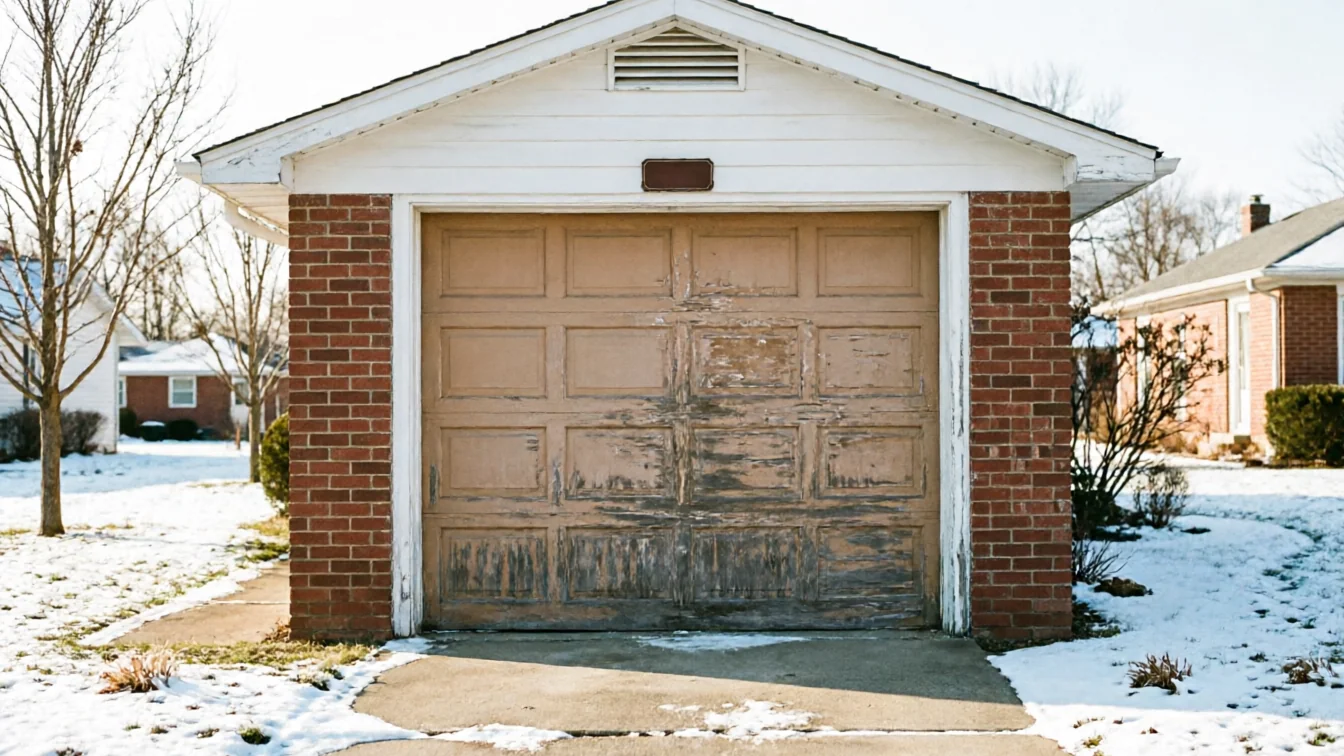
Is Your Old Sheboygan Garage Door Worth Fixing, or Time to Replace It
Sheboygan's housing stock runs 1948-1992, median 1975, and that age plus Wisconsin cold decide whether your door is a repair or a tear-out. Here's how to tell.
- Repairs & new doors
- Springs & openers
- Serving 7 nearby communities
The Common Mistake
The mistake we see across Sheboygan is treating every garage door problem like it's the same fix, no matter the house. A homeowner in a place built in 1975 - the median build year for this area - calls about a noisy door expecting the same quick visit as someone with a door from 1992. They're not the same job. Houses here went up mostly between 1948 and 1992, and that's a 44-year spread covering a lot of different door types, track widths, and spring setups across the 17 named areas we work in. A door that's original to a 1950s house in this service area often runs on hardware nobody carries on the truck anymore - different drum sizes, different spring wind, sometimes a mount that doesn't match a modern opener bracket. Swapping one bent roller doesn't fix a door that's been fighting mismatched hardware for seventy winters. The other mistake is the reverse: assuming every door that's old needs full replacement. Plenty of doors from that 1960s-70s stretch are still structurally sound steel or wood, and the section that's failing is the only section that's failing. Knowing which situation you're in starts with knowing when your house was built, not just what the door looks like.
When It Stops Being a DIY Job
A torsion spring replacement on a door built to 1970s-era specs is not a weekend project, and it's not where we'd tell you to start even if you're handy. The spring is wound under enough tension to break bones, and on older torsion setups in this area the shaft, bearing plates, and cable drums are often original equipment that doesn't match anything sold today - you can't just order a universal kit and expect it to seat right. If your house falls in that 1948-1992 build window, which covers most of the service area, assume the hardware is not standard until someone confirms otherwise. Cable fraying, a drum that's cracked, or a bottom bracket that's rusted through on an older door are also not DIY repairs - those parts are under load the whole time the door is closed, not just when it moves. Where we do think homeowners can handle it themselves: lubricating hinges and rollers, tightening loose bolts on the track, and swapping weatherstripping at the bottom of the door. None of that involves stored spring tension. If you're not sure which category your repair falls into, that uncertainty itself is the signal to call rather than guess.
What Local Conditions Do
This area sits in a cold, severe climate band, and that matters more for an older door than almost anything else. Steel panels from the 1960s and 70s don't have the thermal breaks or insulation foam that doors built in the last couple decades do, so they move more with temperature swings - expanding and contracting enough, over enough winters, to work fasteners loose and stress seams that were fine when the door was new. On a newer door this isn't much of an issue. On a door that's already 40 or 50 years into that cycle, cold-weather stress is usually what finally cracks a weak panel seam or snaps a spring that was already fatigued. We also see older springs fail more often in the coldest stretches of winter, because cold steel is more brittle and a spring near the end of its cycle count picks that moment to go. None of this means an old door is doomed - it means the clock on a worn part runs faster here than it would somewhere with a milder winter, and that's worth factoring in when you're deciding whether a repair will hold for another few seasons or just buy you until the next cold snap.
What Is Going On
Put plainly: age plus climate is the real diagnosis behind most of the old-door calls we get in Sheboygan, Kohler, Sheboygan Falls, and the other communities we cover. A door is worth fixing when the failure is isolated - a cable, a roller, a single damaged panel, a spring at end of life - and the rest of the frame and track are square and sound. A door stops being worth fixing when you're chasing the third or fourth separate failure in a couple years, especially on a door old enough that replacement parts have to be special-ordered rather than pulled off a shelf. With median household income in the area around $86,023 and roughly 13,133 owner-occupied houses across the service area, we meet plenty of people weighing a $300 repair against a four-figure replacement, and that's a real decision, not a sales pitch. Our honest limitation: we don't stock obsolete hardware for every door built before 1980, and if your track or drum size is discontinued, we'll tell you that up front instead of jury-rigging a fix that won't last the next cold stretch.
Frequently asked questions
How do I know if my garage door is original to my house?
If your house was built in that 1948-1992 window common to this area, check the spring type and the manufacturer tag inside the door frame. No tag, or a torsion shaft diameter that doesn't match anything sold today, usually means it's original. We can confirm this on a visit before recommending repair or replacement.
Why do old garage door springs fail more in winter here?
Cold steel is more brittle, and in a climate band as cold and severe as ours, a spring that's already near the end of its cycle count is more likely to snap during a hard freeze than during a mild month. It's not that cold causes the wear - it's that cold tends to be when worn-out springs finally give.
Is it cheaper to repair or replace an old door?
Depends on what's broken. A single spring or cable job is almost always cheaper than replacement. If you're on your third separate repair in a short span, or the hardware is discontinued, replacement usually costs less over time than chasing parts for a door built decades ago.
Related garage door services in Sheboygan
More garage door guides
Book garage door service in Sheboygan
Call now or request a quote - tell us what the door is doing and where you are.