
Sheboygan, WI · Garage Door Service
What That Noise Is Actually Telling You
Sheboygan homes mostly date to the 1960s-70s cold-severe climate band. Here's what grinding, popping, and groaning doors are telling you before the spring lets go.
- Repairs & new doors
- Springs & openers
- Serving 7 nearby communities
The Common Mistake
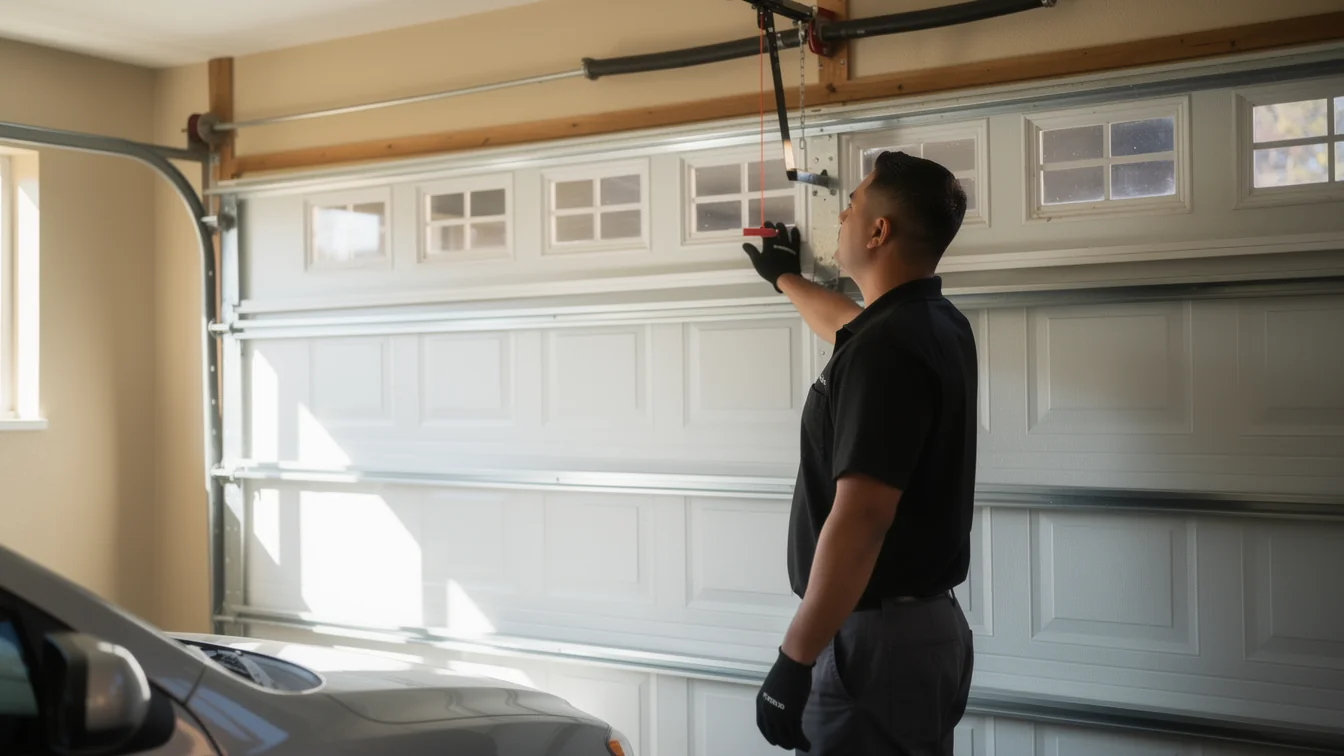
The mistake we see most is someone hearing a new sound from the door and deciding to wait until it gets worse before calling anyone. That might be fine advice for a dripping faucet. It is not fine advice for a 150-to-400-pound door hanging on two cables and a torsion spring wound tight enough to do real damage if it lets go wrong.
Across the service area, housing mostly went up between 1948 and 1992, with the median landing around 1975. That means a huge share of the openers, springs, and tracks under inspection right now are original or close to it. A door that age doesn't make noise for no reason - it makes noise because something that was fine for forty years has finally worn down to the point where it isn't quiet anymore. Grinding, popping, a loud bang on the way up, a rhythmic thump every few feet of travel - these aren't personality quirks of an old door. They're the parts telling you where the wear is.
We'd rather get the call for a noise than get the call after a cable snaps with the door half open and a car underneath it. The mistake costs more than the service call ever would.
When It Stops Being a DIY Job
Lubricating hinges and rollers, tightening the loose bolts on the track brackets, checking the photo-eye sensors for dust - that's homeowner-level work and we'd never tell you otherwise. Springs are a different category entirely.
If the noise is coming from the spring area at the top of the door - a sharp pop, a metallic groan when the door is at rest, or a visible gap in the coil - that's the line. Torsion springs on a standard residential door are wound under several hundred pounds of tension. On the 1960s and 70s hardware common across this area's 17 named communities, a lot of that spring stock is original, which means it's also old enough that the steel has fatigued in ways you can't always see from the garage floor.
We'll say the honest limitation here plainly: we don't walk customers through spring replacement over the phone, and we wouldn't recommend trying it yourself even with a video open next to you. The tools for winding a torsion spring safely aren't something most garages have, and the margin for a bad outcome is a trip to urgent care, not a redo. Everything else on the door - we'll talk you through it if you want to try first.
What Local Conditions Do
This area sits in a cold-severe climate band, and cold does specific, predictable things to garage door hardware. Steel contracts. Lubricant that was fine in August turns thick and sluggish in January, which puts more load on the opener motor and more strain on a spring that's already working at its rated limit. Nylon rollers get brittle. Weatherstripping that seals fine most of the year shrinks just enough to let the door's bottom panel chatter against the floor on the way down.
A door and opener built for a house going up in 1975 weren't engineered with decades of this kind of seasonal swing baked into the warranty assumptions. They were built to do the job for a reasonable stretch under normal use, and most of them have already outlasted that. So when a door starts groaning specifically in cold weather, or an opener strains harder on winter mornings, that's not coincidence - that's the climate finding the weak point in hardware that's been absorbing freeze-thaw cycles for close to fifty years in some cases.
The noise shows up in winter first because winter is when the system has the least slack left to give.
What Is Going On
Put the pieces together and the pattern across this area is consistent: older housing stock, a median build year in the mid-70s, and a climate that's hard on steel and rubber every winter. With 13,133 owner-occupied houses in the service area, most built well before 1992, a large share of the doors on the road are old enough that their springs have already outlived the cycle count they were rated for, cold weather or not.
So the noise isn't random and it isn't cosmetic. A grinding sound usually points to a roller or bearing losing its lubrication under load. A sharp bang on travel usually points to a cable or hinge shifting. A groan at rest, especially one that gets louder as the temperature drops, points at the spring itself. None of these get quieter on their own, and all of them get more expensive the longer they run.
We cover Kohler, Sheboygan Falls, Wilson, Howards Grove, Oostburg, Plymouth, Holland, Cleveland, Cedar Grove, Cascade, Elkhart Lake, Random Lake, Belgium, Schleswig, Kiel, and Newton, along with Sheboygan itself. If your door's making a sound you haven't heard before, that's worth a look before it makes a sound you really don't want to hear.
Frequently asked questions
Why does my garage door make a loud bang when it opens in winter?
On older torsion-spring systems, a bang on the way up is often a cable or hinge that's shifted slightly, and cold makes the metal less forgiving, so a small gap that was quiet in summer becomes audible. Given how much of the housing stock here dates to the 1960s-70s, this is a common call once temperatures drop into the cold-severe range.
Is a groaning spring an emergency?
Not always an emergency, but it's not something to leave alone either. A groaning spring at rest usually means fatigue in the coil. On hardware this old, waiting risks a sudden snap under tension rather than a scheduled replacement on your terms.
Can I lubricate my own garage door?
Yes - rollers, hinges, and the track are fine for a homeowner to maintain with the right lubricant. Springs and cables are the parts we'd ask you to leave alone, since they're under serious tension and the tools to handle them safely aren't typical garage equipment.
Does cold weather actually damage garage door parts?
It accelerates wear that's already there. Steel contracts, lubricant thickens, and rollers get brittle, which puts more strain on hardware that in this area is often original to houses built between 1948 and 1992. The cold doesn't create the problem, but it finds it faster.
Related garage door services in Sheboygan
More garage door guides
Book garage door service in Sheboygan
Call now or request a quote - tell us what the door is doing and where you are.