
Sheboygan, WI · Garage Door Service
Garage Door Maintenance for Kohler's 1960s-Era Homes
Kohler homes mostly date to the late 1960s, which means original hardware on many doors. We travel the 2 miles from Sheboygan to service springs, rollers, and openers built for a different era.
- Repairs & new doors
- Springs & openers
- Serving 7 nearby communities
Getting It Booked In
Kohler sits about 2 miles from our shop in Sheboygan, so a maintenance call here isn't a special trip, it's a short one. We don't keep a branch or a drop box in Kohler itself. What we have is a truck that comes from Sheboygan with the parts a house like yours is likely to need, because we've seen enough of them.
That matters more here than it sounds. With roughly 789 households in the immediate area and a median household income well above the wider Sheboygan service region, a lot of these garages got the solid builder-grade door and opener that was standard when the house went up, not an upgrade since. Booking in means telling us the brand on the opener motor housing if you can read it, and whether the door is one piece or sectional. That one detail changes what's on the truck when we show up.
What Can Go Wrong
The median home in this part of Kohler was built around 1968, which puts a lot of garage doors and openers past the point where original parts are still being made. Torsion springs from that era were often sized for a different door weight than what's hanging on the track now, especially if the door's been swapped once already without re-checking the spring.
Openers are the other issue. Federal rules requiring photo-eye safety reversal on garage door openers didn't exist when these houses were built, so an opener that's never been replaced may not have that safety feature at all, not because it failed, but because it predates the requirement. We also see galvanized rollers that have gone past their service life and steel track that's shifted slightly out of plumb over fifty-some years of seasonal freeze and thaw.
Sheboygan County sits in a severe cold climate band, and that cold is hard on anything with lubricant and moving metal. Hardware from 1968 wasn't built with today's weatherstripping or insulation standards in mind, so a door that closes fine in July can bind, drag, or ice shut in January even with no other defect. That's the fault we're called out for most in homes of this age.
The DIY Question
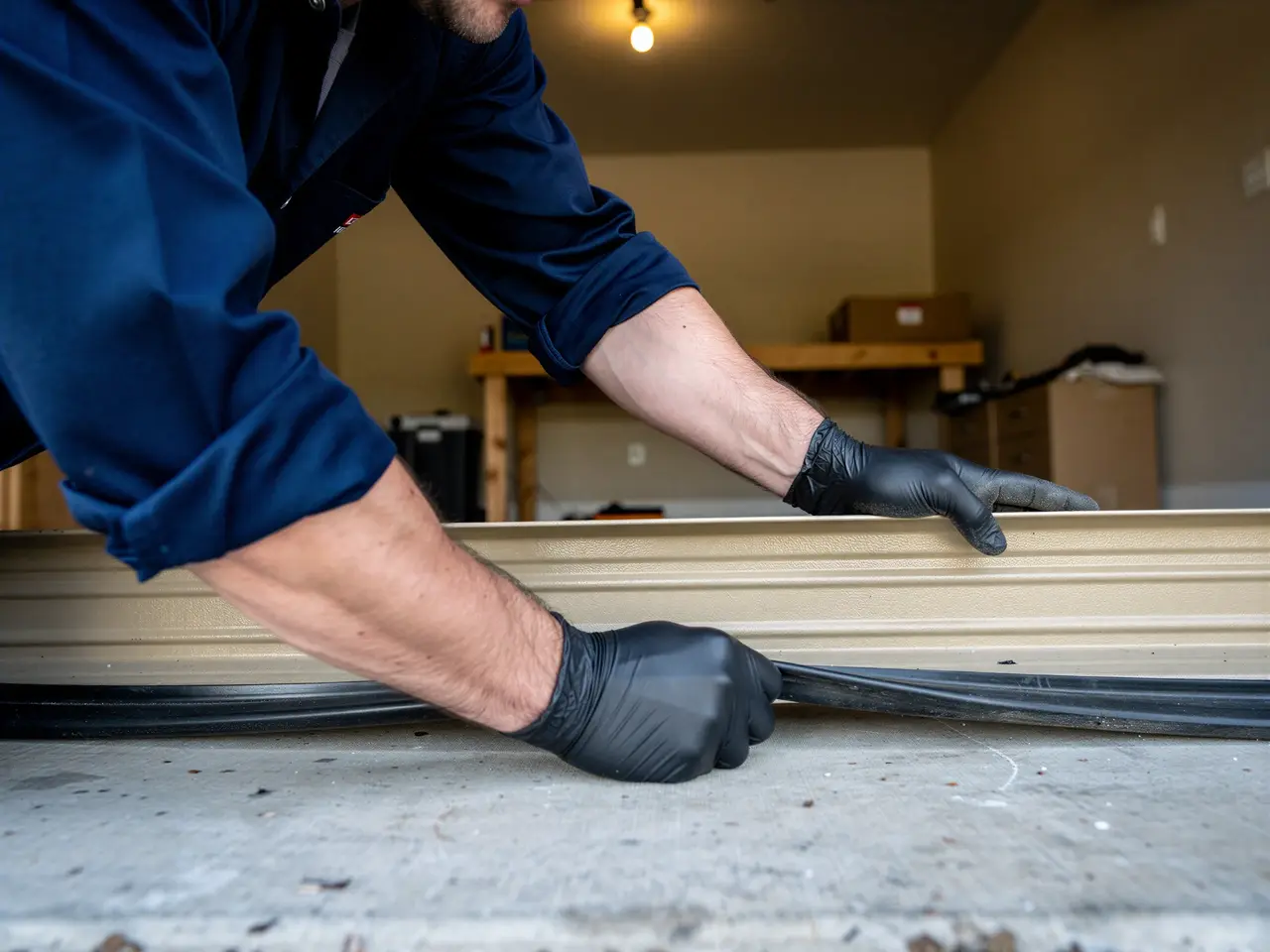
Lubricating hinges and rollers, checking the weatherstrip at the bottom of the door, and wiping down the tracks are jobs a homeowner can do safely, and we'd rather you do them than skip them entirely. A door that gets light upkeep twice a year runs quieter and lasts longer regardless of its age.
Where we tell people to stop is the torsion spring and anything involving the high-tension cables next to it. On a door as old as the typical one in this area, the spring may already be under more or less tension than it was designed for, and there's no safe way to judge that by eye. We also won't talk someone through replacing an opener that lacks photo-eye safety reversal over the phone - that's a job where getting it wrong has real consequences, not just an inconvenience.
One honest limit on our side: if a door's track and spring system are original to a 1968 install and the opener motor has already failed, we'll often tell you straight that patching it piece by piece costs more over two years than replacing the unit once. We'd rather say that up front than bill you for both.
How We Fix It
On a maintenance visit we check spring tension against the actual weight of the door hanging on it now, not the weight it was built for in 1968, since those numbers often drift apart after a door swap. We inspect the track alignment, since decades of a Wisconsin winter settling the slab can throw sectional tracks slightly out of square even when nothing looks obviously wrong.
For openers without photo-eye safety reversal, we explain the gap and let you decide on timing, but we note it on every visit until it's addressed. We re-lubricate hinges and rollers with a lubricant rated for the cold rather than a general household oil, since the severe cold band this area sits in will gum up the wrong product by February.
We also check the bottom seal and weatherstrip, since original builder-grade seals from this era are usually well past flexible and let cold air straight into the garage. None of this is a full tear-out. It's the set of checks that catches the failure before it becomes a Saturday morning with the car trapped inside.
Frequently asked questions
How often should a garage door this old be serviced?
For a door dating to the late 1960s like most in this part of Kohler, we recommend a check twice a year, going into and coming out of winter. Cold-weather stress on aging hardware is the main driver of failures here, so catching a worn roller or loosening track before January matters more than it would with a newer door.
Does my opener need replacing if it still works fine?
Not automatically. But if it was installed before photo-eye safety reversal became standard and has never been upgraded, we'll flag it. A working opener without that safety feature isn't broken, it's just built to an older standard, and that's worth knowing even if you decide to wait.
Is it worth maintaining an original 1968 door instead of replacing it?
Often yes, if the panels and track are sound - the labor is the same either way and the parts cost less than a full replacement. But if the spring is already mismatched to the door weight and the opener is failing too, we'll tell you when replacement is the cheaper path over time.
Book garage door service in Sheboygan
Call now or request a quote - tell us what the door is doing and where you are.