
Sheboygan, WI · Garage Door Service
Garage Door Repair for Kohler's 1968-Era Homes
Kohler homes went up mostly around 1968, earlier than much of the surrounding service area. We cover the torsion springs and extension hardware that era still carries.
- Repairs & new doors
- Springs & openers
- Serving 7 nearby communities
Getting It Booked In
We run out of Sheboygan, about 2 miles from Kohler, so there's no separate branch here and no local response-time promise to make - just a short drive. When you call, tell us the age of the house if you know it; a lot of Kohler's stock dates to around 1968, a decade or more older than the typical build across the wider service area, and that changes what we bring on the truck before we ever see the door. Original hardware from that period isn't always a drop-in swap for what's sold today, so knowing the vintage ahead of time saves a second trip.
We book the same way for every address in the area - no Kohler-specific scheduling window, no priority queue. What's different is what we expect to find once we're there. A door installed in the late 1960s has usually been serviced, patched, or partially replaced at least once, and sometimes by more than one hand, so the first job on site is often figuring out what's actually original and what's been swapped in since.
What Can Go Wrong
A house built around 1968 usually started with an extension-spring setup or an early torsion system, both sized for the steel and panel weight common then - lighter, thinner steel than a lot of what's manufactured now. Over fifty-plus years, the failure pattern on that hardware is predictable: frayed extension cables, pulley brackets that have worked loose from the jamb, and torsion springs that were never rated for the heavier replacement door someone bolted on at some point. If a panel was swapped out in the 1990s or 2000s without upgrading the spring to match the new weight, the opener's been fighting an undersized spring ever since, and that shows up as a door that reverses on its own or an opener motor that's running hotter than it should.
Cold is the other factor. This part of Wisconsin sits in a severe cold climate band, and steel track and roller hardware from the late '60s doesn't flex the way newer rollers do once temperatures drop. Expect stiffer travel, slower response from the opener, and rollers that bind in the track on the coldest mornings - a symptom owners often mistake for a dying opener when it's really just old steel in cold weather.
The DIY Question
Extension springs are a fairer DIY target than torsion springs - lower stored tension, less likely to put you in the ER if something slips. That said, hardware this old often has deformed brackets or a jamb that's shifted slightly over fifty years, and neither shows up until you've got the spring half off. If your door is original to a 1968-era build, we'd rather you call before you start pulling the bracket loose.
Where DIY genuinely makes sense: lubricating hinges and rollers, tightening visible bolts, clearing track debris, and testing the photo-eye sensors if your opener has them. Where it doesn't: anything involving the torsion spring, the cable drum, or a bent track rail on an older door, since the parts underneath may not match what a newer manual assumes you're working with.
How We Fix It
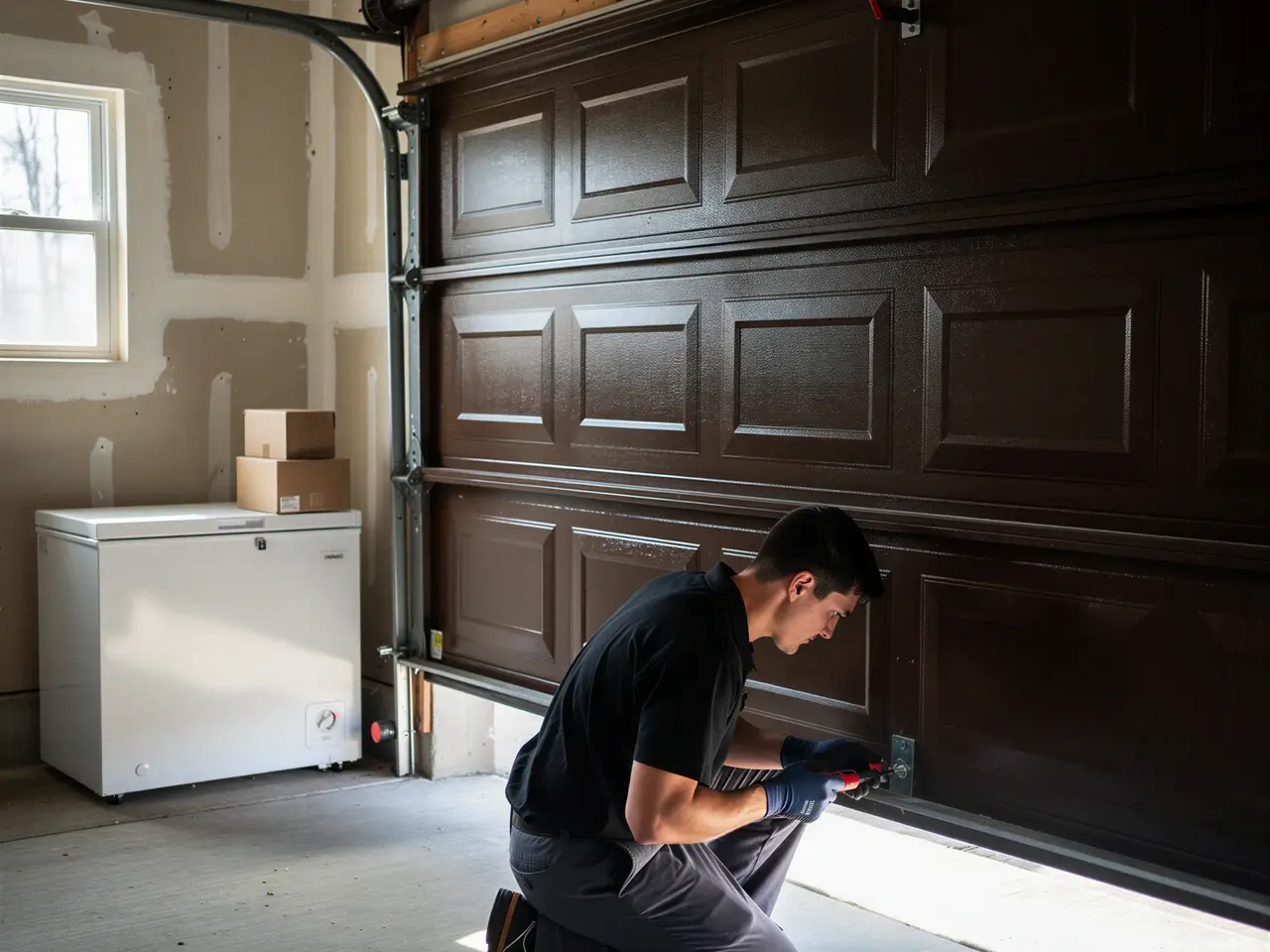
On a 1968-era door, the first step is matching the hardware correctly instead of assuming it's standard. We measure the spring against the actual panel weight on the door now, not the weight it probably had new, since replacement panels installed over the decades rarely match the original gauge. If the torsion shaft or drum has been swapped already, we check that whatever's there is rated for the rest of the system before doing anything else.
We'll be straight about when a repair isn't worth doing. If the track is bent in more than one place, or the jamb framing has shifted enough that a new track won't seat square, patching the old hardware is a short-term fix at best - full replacement ends up cheaper over a few years. We won't push a repair we don't think will hold, and we won't quote one without seeing the actual wear on-site.
Frequently asked questions
Is my garage door original if my house was built around 1968?
It's possible, but unlikely after this many years. Most doors from that era have been replaced at least once, though the spring and track hardware sometimes survives several door swaps. We check the hardware stamp and bracket style on site to tell what's actually original versus later work.
Do you have a shop in Kohler?
No. We're based in Sheboygan, about 2 miles out, and cover Kohler from there. There's no local branch or separate booking line for Kohler addresses.
Why does my door stick more in winter?
This area sits in a severe cold climate zone, and older steel track and rollers stiffen up more than newer hardware when temperatures drop. If the door sticks only on cold mornings, that's usually the track and rollers, not a failing opener.
Should I repair or replace a door this old?
Depends on the track and jamb, not just the spring. If the track is bent in multiple spots or the framing has shifted, replacement holds up better long-term than another patch repair. We'll tell you straight which side of that line your door falls on.
Book garage door service in Sheboygan
Call now or request a quote - tell us what the door is doing and where you are.