
Sheboygan, WI · Garage Door Service
Garage Door Maintenance for Cedar Grove's Late-1970s Housing Stock
Cedar Grove homes mostly went up around 1978, meaning 40+ year old steel doors and springs built for a mild climate they never got. We service from Sheboygan, 13 miles out.
- Repairs & new doors
- Springs & openers
- Serving 7 nearby communities
What Is on the Truck
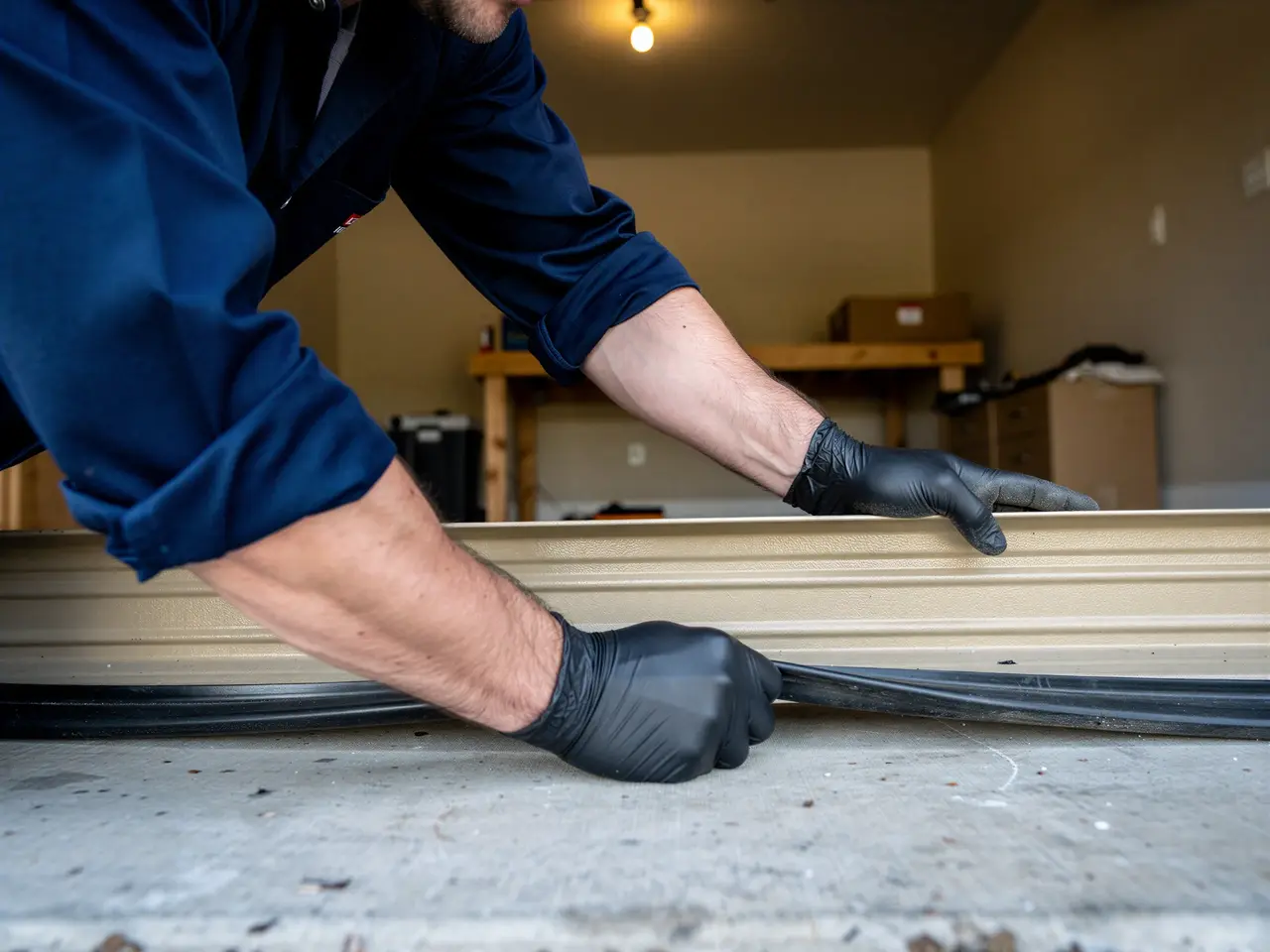
Most houses in Cedar Grove went up around 1978, which puts the garage doors squarely in the first generation of mass-produced steel sectional doors. That's what we load for before we ever leave Sheboygan: torsion springs sized for the lighter-gauge steel panels common to that build era, extension spring kits for the narrower single-car bays a lot of these lots still have, and chain-drive opener parts, since screw-drive and belt systems weren't standard yet when this neighborhood was framed. We also carry weatherstrip and bottom seal stock sized for the slightly different track widths those older door frames used - newer universal kits don't always seat right on hardware this old. Thirteen miles out from Sheboygan isn't far, but it means the truck is loaded before the call, not after, so we're not driving back for a part we should have had the first time.
We don't stock every obsolete bracket still bolted to a 1978 door. If a house has had three different owners' worth of patch repairs on the track, sometimes we're carrying options, not one fix.
What You Are Seeing
A door that's slow to close, or closes crooked on one side, on a house this age is almost always the spring losing tension unevenly - normal for hardware pushing past 40 years, especially extension springs that were never rated for that kind of service life. If the opener grinds or stutters before it lifts, that's usually the chain-drive gear set wearing down, not the motor itself. Rust streaking down from the top roller brackets is common here too - galvanized coatings from the late '70s were thinner than what's used now, and Wisconsin winters don't let that surface rest.
Some owners notice the door feels heavier to lift by hand than it used to. That's the spring losing its calibrated tension, and it's not something to force past - a spring under partial tension that finally lets go can do real damage to whoever's standing under the door.
The DIY Question
Lubricating hinges and rollers, checking the track for debris, and testing the auto-reverse sensor are all fine for a homeowner to do without us. Replacing a spring on a door this age is not - a 1978-era torsion or extension spring is under the same stored force as a new one, and the winding cones on older hardware are more likely to be seized or corroded, which makes them worse to handle, not easier.
We'd rather get a call for a five-minute inspection than a call after someone's tried to unwind a 45-year-old spring with a screwdriver. That's not caution for its own sake - it's the actual failure mode we see on houses built in this window.
Why This Fails Locally
Wisconsin's climate here runs cold and severe, and that matters more on 1978-era hardware than it would on a door installed last year. Steel contracts in deep cold, and on an older panel with 45 years of flex cycles already behind it, that contraction is what turns a minor gap into a crack along a seam or a bent bottom panel. Original weatherstripping from that era wasn't designed with today's seal compounds, so it hardens and splits well before a modern equivalent would, letting cold air and moisture into the spring and track hardware all winter.
That combination - old steel, old seals, hard winters - is why doors in this part of the service area tend to fail at the panel and seal level before the opener motor itself gives out. It's a different failure pattern than you'd see on a door from the 1990s or later, which is part of why maintenance on a house like this isn't the same job as maintenance on a newer build nearby.
How We Fix It
On a 1978-built door we start with the spring - checking tension and winding cone condition before touching anything else, since that's the part most likely to be past its service life. We replace weatherstrip and bottom seal with compounds rated for the cold band this area sits in, not whatever generic kit happens to be in stock. Track alignment gets checked against the original frame width, since these houses sometimes have non-standard spacing compared to doors installed after the 1990s.
We don't push full replacement on a door that's sound structurally just because it's old. If the panels are solid and the track is straight, a spring and seal service gets another several years out of it. If the steel's cracked at a seam or the track's bent beyond adjustment, we'll say so plainly rather than keep patching it.
Getting It Booked In
We come out from Sheboygan, 13 miles to Cedar Grove, for both one-time maintenance visits and ongoing checks on doors from this build era. Because we're traveling in rather than working out of a local branch, it helps to describe what the door's doing - slow close, grinding opener, visible rust at the brackets - when you call, so the right parts are already on the truck. See our full page on Cedar Grove garage door work for installs and repairs beyond maintenance, or the Sheboygan maintenance page for what the service covers area-wide.
Frequently asked questions
How old are most garage doors in Cedar Grove?
Most homes here were built around 1978, so a lot of the original garage doors and hardware are pushing 45 years old. That means steel sectional doors with torsion or extension springs from an era before current seal compounds and gauge standards, which changes what tends to fail first compared to a newer house.
Do you have a crew based in Cedar Grove?
No - we run out of Sheboygan, about 13 miles away, and travel in for maintenance and repair calls. We load the truck for the hardware common to this area's build era before we leave, so the trip doesn't mean a second visit for a missing part.
Is it worth maintaining a door this old instead of replacing it?
Often yes. If the panels are straight and the track isn't bent, a spring and seal service on a 1978-era door can add years of life for a fraction of replacement cost. If the steel's cracked or the track's damaged beyond adjustment, we'll tell you that instead of billing for a patch that won't hold.
Why does my door feel harder to lift in winter?
Cold contracts the steel panel and stiffens old weatherstripping, and on hardware this age the spring tension has usually drifted from where it should be too. Combined, that's what makes a door feel noticeably heavier in January than it did in July - worth a spring check before it gets worse.
More garage door services in Cedar Grove
Book garage door service in Sheboygan
Call now or request a quote - tell us what the door is doing and where you are.