
Sheboygan, WI · Garage Door Service
Cable Repair for Cedar Grove's 1978-Era Garage Doors
Cedar Grove homes built around 1978 still run on original lift cables. We drive the 13 miles from Sheboygan to replace frayed or snapped cable before it costs you a door.
- Repairs & new doors
- Springs & openers
- Serving 7 nearby communities
What Is on the Truck
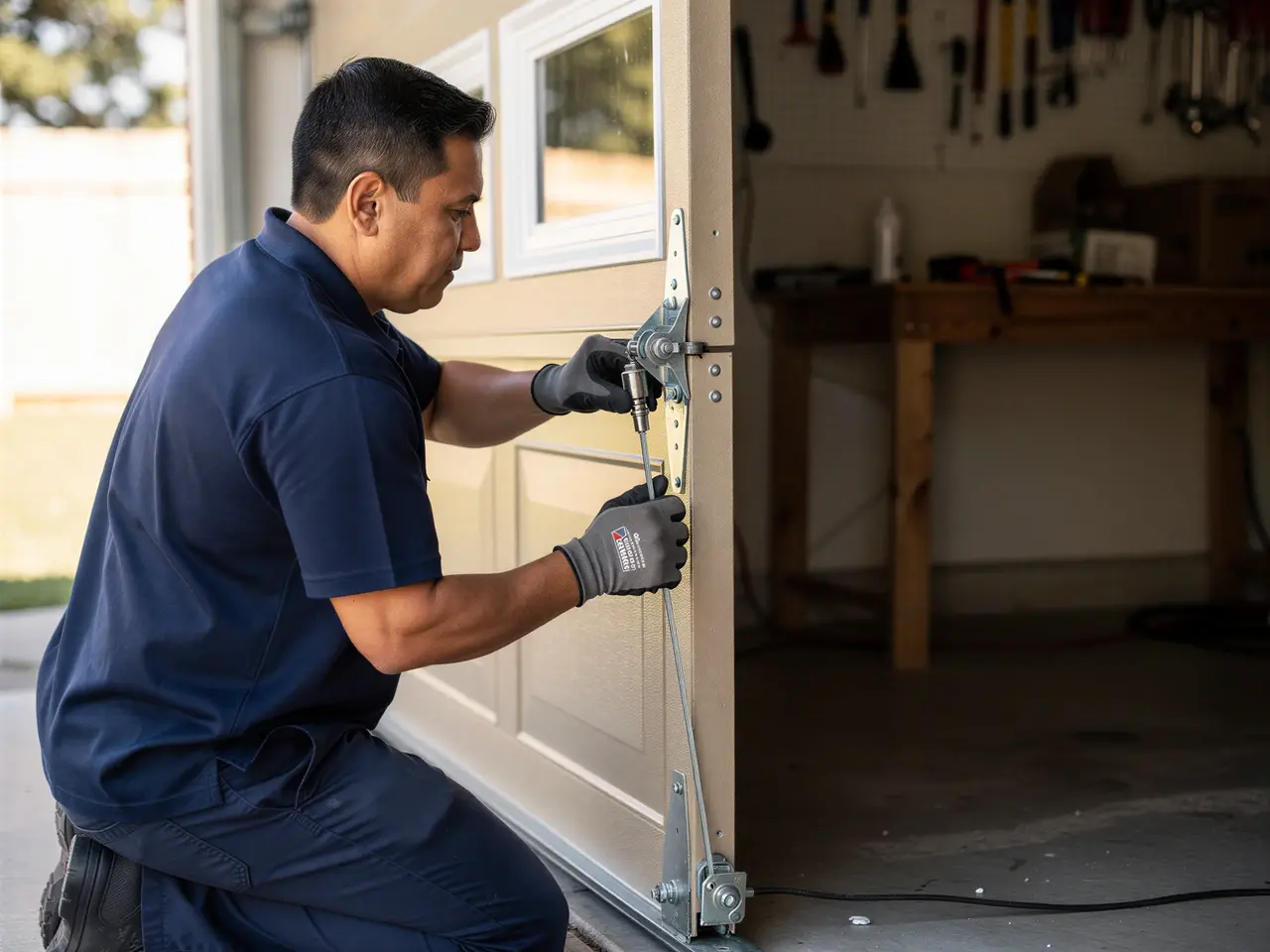
When we head out the 13 miles from Sheboygan to Cedar Grove, we load for one thing: cable, and the hardware that goes with it. Galvanized aircraft cable in the sizes that match doors built around the town's 1978 median construction year, plus the drums, pulleys, and end fittings that those original setups used. A house built in 1978 almost never has a cable that's been swapped since - cable is the kind of part that gets replaced only when it fails, not on a schedule, so what's on the door now is very likely original 1970s-spec wire that's stretched, rusted, or starting to fray at the drum. We also carry extension springs and the small parts - safety cables, pulleys - that tend to go bad in the same stretch of years as the lift cable itself, since they're all carrying the same load on the same hardware generation.
What You Are Seeing
If a cable is on its way out, you'll usually catch it before it snaps: one side of the door hangs lower than the other, the door creeps sideways in the tracks, or you hear a soft popping sound as strands give way one at a time. On a door that's run on the same cable since 1978, this isn't an if - it's a when. Full snap looks different: the door drops hard on one corner, sometimes with a bang, and it won't move under opener power because the opener can't lift a door that's lost half its support. Either way, don't force it. A door riding on a half-failed cable can jump the track or come down unevenly, and that's a heavier fix than the cable alone.
The DIY Question
Cable under tension is not a job to learn on your own door. Extension spring systems - common on houses from this era - store enough force to snap a cable hard enough to cut skin or take out a finger if it lets go while you're working on it. We'll say plainly: this is one of the repairs where the right call is to leave it, not because the part is expensive, but because the failure mode is physical, not financial. If you've got a torsion bar setup instead of extension springs, the risk is similar - winding bars and cable drums under load don't forgive guesswork. Call it in rather than wing it.
Why This Fails Locally
Cedar Grove sits in a cold-severe climate band, and that matters more for cable than most homeowners expect. Galvanized wire that's been flexing through winters since 1978 picks up micro-fractures where cold makes steel brittle and ice adds extra load to the drum. A cable that's held fine through forty-some mild days a year can go in a single hard freeze when it's already thin from age. Add in that most of the service area's housing - ours included at 13,133 owner-occupied houses - clusters in that 1948-to-1992 build window, and you've got a lot of original hardware all aging on the same timeline, which is why cable calls from this stretch of houses tend to come in bunches during cold snaps rather than spread evenly across the year.
How We Fix It
We replace the cable in kind - matching gauge and length to the drum and door weight rather than forcing a generic size - and we check the drums and pulleys it rode on, since a worn pulley groove will chew through a brand-new cable just as fast as the old one failed. If the door is an extension spring setup from the 1978-era build run, we inspect the safety cables running through the springs at the same time; replacing one without the other on a door this age is a half-job. We don't recommend patching a frayed cable with a splice - it's not a long-term fix and it's not one we do. If the drums or track are worn past what a cable swap alone will fix, we'll tell you that on site before any work starts, not after.
Getting It Booked In
We cover Cedar Grove from our Sheboygan base, 13 miles out, so a call here goes on the route the same way calls from the rest of the service area do - no local branch, no separate crew, just the same truck making the drive. Tell us what the door's doing - sagging, grinding, dropped flat - and we'll bring the cable stock that matches a door from this build era. For the rest of what we do around Cedar Grove, including spring and opener work, see our main page for the town.
Frequently asked questions
How old does a cable usually get before it fails on a house like mine?
On houses built around 1978, which is the median here, original cable is now pushing five decades of flex cycles. Most fail from fatigue before any one event, so by the time you notice sag or hear popping, the wire is already well past its working life.
Can I just tighten the cable instead of replacing it?
No. A cable that's stretched or frayed won't hold reliable tension even if you take up the slack, and working near a loaded cable or spring without the right clamps is how fingers and faces get hurt. Replacement, not adjustment, is the fix.
Does cold weather really affect the cable, or just the springs?
Both. Cedar Grove's cold-severe winters make galvanized cable more prone to cracking at stress points, especially cable that's already decades old. Spring tension changes with temperature too, which puts extra load on a cable that's already weak.
Do you carry cable sized for older extension spring doors?
Yes. We stock cable in the gauges and lengths that match the hardware generation common to houses built in this stretch of years, including extension spring setups, which are common on homes from the late 1970s.
More garage door services in Cedar Grove
Book garage door service in Sheboygan
Call now or request a quote - tell us what the door is doing and where you are.