
Sheboygan, WI · Garage Door Service
Garage Door Maintenance for Plymouth's 1970s Housing Stock
Plymouth homes mostly date to 1970, a decade newer than much of our area. That means different springs, different openers, and a different failure pattern we check for.
- Repairs & new doors
- Springs & openers
- Serving 7 nearby communities
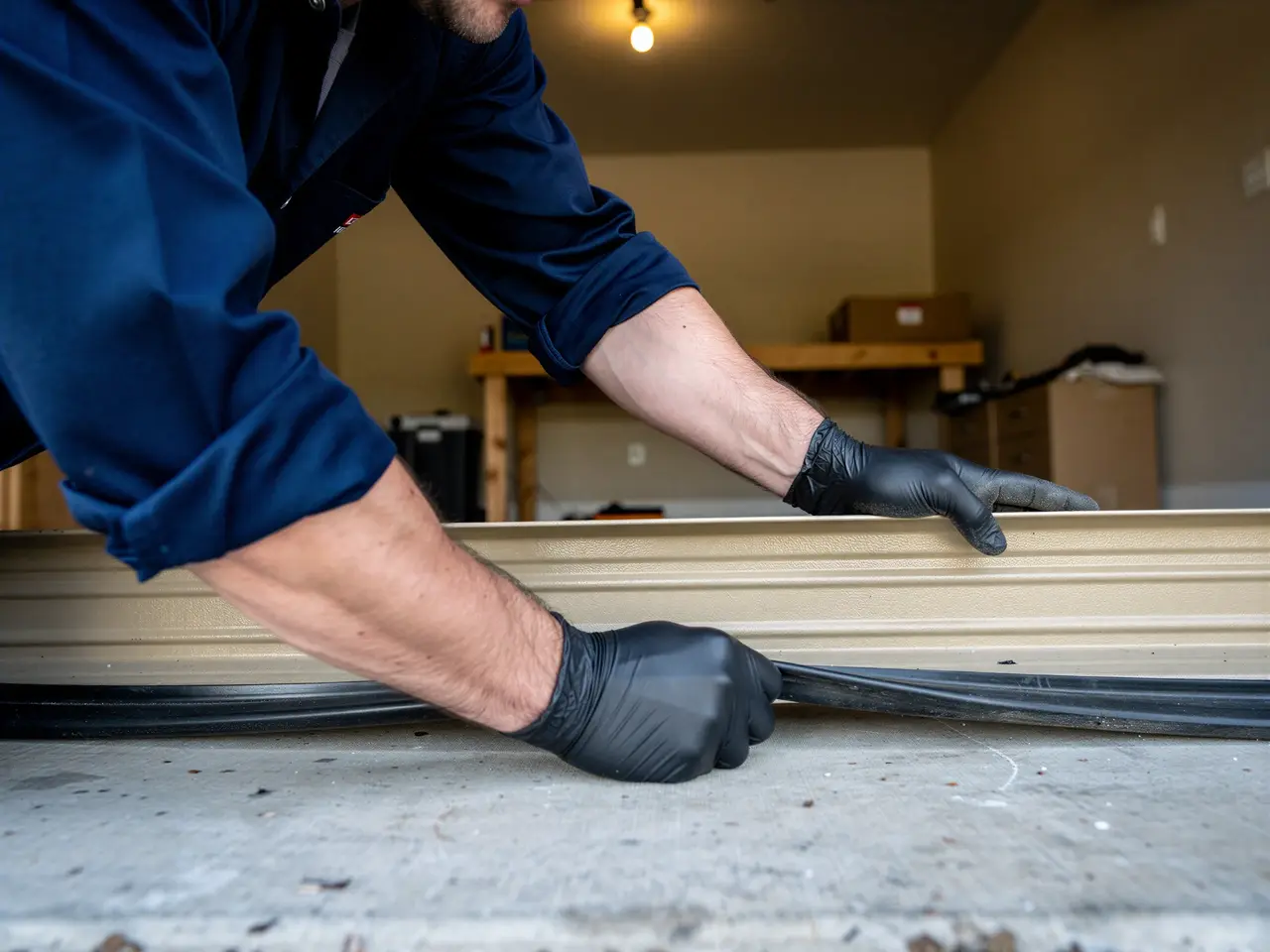
The DIY Question
Most garage doors in Plymouth went up around 1970, which puts a lot of original hardware well past its expected life even if nobody's touched it. A torsion spring rated for 10,000 cycles doesn't care that it looks fine - it's the cycle count that matters, and a door installed in 1970 has likely seen two or three spring replacements it never got. If yours has the original spring, original cable, and original rollers, you're not looking at a tune-up, you're looking at a door that's been running on borrowed time for years.
There's plenty you can do yourself: vacuum the tracks, check that the auto-reverse still works by setting a 2x4 under the door, tighten loose roller brackets if you can reach them safely. What you shouldn't touch is anything under spring tension - winding cones, cable drums, anything that would snap back if it let go. That's not a DIY caution we're inventing to sell a visit; a wound torsion spring under load has put people in the hospital. If your door is from the original build and nobody's serviced the spring side, that's the one thing worth a call, not a wrench.
What Is on the Truck
For a town built mostly around 1970, the parts that fail first are predictable: torsion springs sized for the original lighter steel doors, galvanized lift cables that have started to fray at the drum end, and nylon rollers that have gone brittle from forty-plus winters of cold-to-warm cycling. We carry standard torsion springs in the common wind and cycle ratings that cover this era of door, plus steel rollers to replace the nylon ones that were standard when these houses were framed.
We don't stock every obsolete track bracket or the exact original hinge pattern some of these doors shipped with - if your door uses hardware that stopped being made decades ago, that part may need to be special-ordered, and we'll tell you that up front rather than make you wait on the truck for something that isn't on it. Openers are the other common swap: a chain-drive unit installed when the house was new is now well beyond any manufacturer's expected service life, and replacement parts for that generation of opener are getting harder to source every year.
Time on the Job
A standard maintenance visit - lubrication, hardware inspection, spring balance check, opener safety test - runs on the shorter side because we're coming from Sheboygan, about 12 miles out, and we plan the visit around that drive rather than squeezing it in as an afterthought. If the inspection turns up a spring at the end of its cycle life or cable fraying at the drum, that becomes a repair call rather than a maintenance call, and we'll tell you the difference before any work starts so you're not surprised by the invoice.
We don't do same-day emergency dispatch to Plymouth - we're not based here, and we won't claim a response time we can't back up from 12 miles away. What we can do is schedule the visit for a day when we're already routing through the area, which keeps the job efficient without pretending we're around the corner. If your door is stuck shut with the car inside, say so when you call, and we'll be straight about whether that's something that can wait for the next routed trip or needs to move up.
How We Fix It
On a house from the 1970 era, the fix usually starts with the spring system rather than the opener, because the spring is what's been under constant load since the house was new. We check the wind direction and wire gauge against the door weight - a lot of these doors have had a heavier insulated replacement hung on hardware sized for the original lighter panel, which throws off the balance and shortens everything downstream, rollers and cables included.
If the door still closes but drags or reverses on its own, that's usually a track alignment or roller problem, not a spring problem, and it's a cheaper fix. We replace what's worn rather than the whole assembly when the rest of the hardware is sound - there's no reason to swap a track that's true just because the rollers running in it are shot. Where we draw the line is openers from this era with cracked gears or burnt-out motors: at that point, sourcing parts for a forty-plus-year-old unit usually costs more than a new opener, and we'll say so rather than bill you for a repair that won't hold.
Getting It Booked In
Because Plymouth is about 12 miles from our Sheboygan base, we fit maintenance visits here into routes rather than treating every call as a standalone trip - it keeps the cost down and means we're not driving out for a single lubrication job on its own. When you call, tell us roughly when the door was last serviced, if you know; for a house from 1970 that's often been since forgotten, and that gap is exactly what we're checking for.
We'll ask a few questions up front about the door's age and whether it's had any opener or spring replacement since the house was built, mostly so we can bring the right spring size and roller type on the truck instead of guessing. You can see more on what we cover for Plymouth specifically through our service page, and if what you need is a broader rundown of maintenance across the whole area we work, that's covered separately on our Sheboygan maintenance page.
Why This Fails Locally
Plymouth's housing sits around a median build year of 1970, roughly 3,947 households in total, and a median income near $67,784 - numbers that shape what we see on a service call here differently than in parts of the wider area with older or newer stock. A generic maintenance checklist written for any town misses the specific thing happening here: a cluster of doors all hitting the same hardware age-out window at roughly the same time, because they were all built in the same few years.
The cold matters too - this is a severe cold climate, and the freeze-thaw cycle is harder on steel springs and dried-out weatherstripping than most homeowners realize until a door won't lift on a sub-zero morning. A maintenance plan that doesn't account for 1970-era hardware reaching the end of its service life, in a climate that stresses that hardware every winter, isn't really a maintenance plan for Plymouth - it's a maintenance plan for nowhere in particular, printed with the town name swapped in.
Frequently asked questions
How old is the typical garage door in Plymouth?
Most houses here were built around 1970, so unless the door's been replaced, the hardware is from that era too. Springs and openers from a 1970 build are well past any reasonable service life, even if the door still opens and closes without obvious trouble.
Do you have a crew based in Plymouth?
No - we're based in Sheboygan and travel to Plymouth, about 12 miles out. We route maintenance visits efficiently rather than offering same-day emergency dispatch, and we're upfront about that when you call.
Is it worth maintaining an original 1970s opener instead of replacing it?
Usually not. Parts for openers that old are hard to source, and by the time a motor or gear fails, the repair cost often approaches what a new opener costs. We'll inspect it and tell you honestly which side of that line your unit falls on.
What does a maintenance visit actually check?
Spring balance, cable condition at the drum, roller wear, track alignment, and the opener's auto-reverse safety function. For a 1970-era door, we pay particular attention to whether the spring was ever sized up after a heavier replacement door was installed.
Book garage door service in Sheboygan
Call now or request a quote - tell us what the door is doing and where you are.